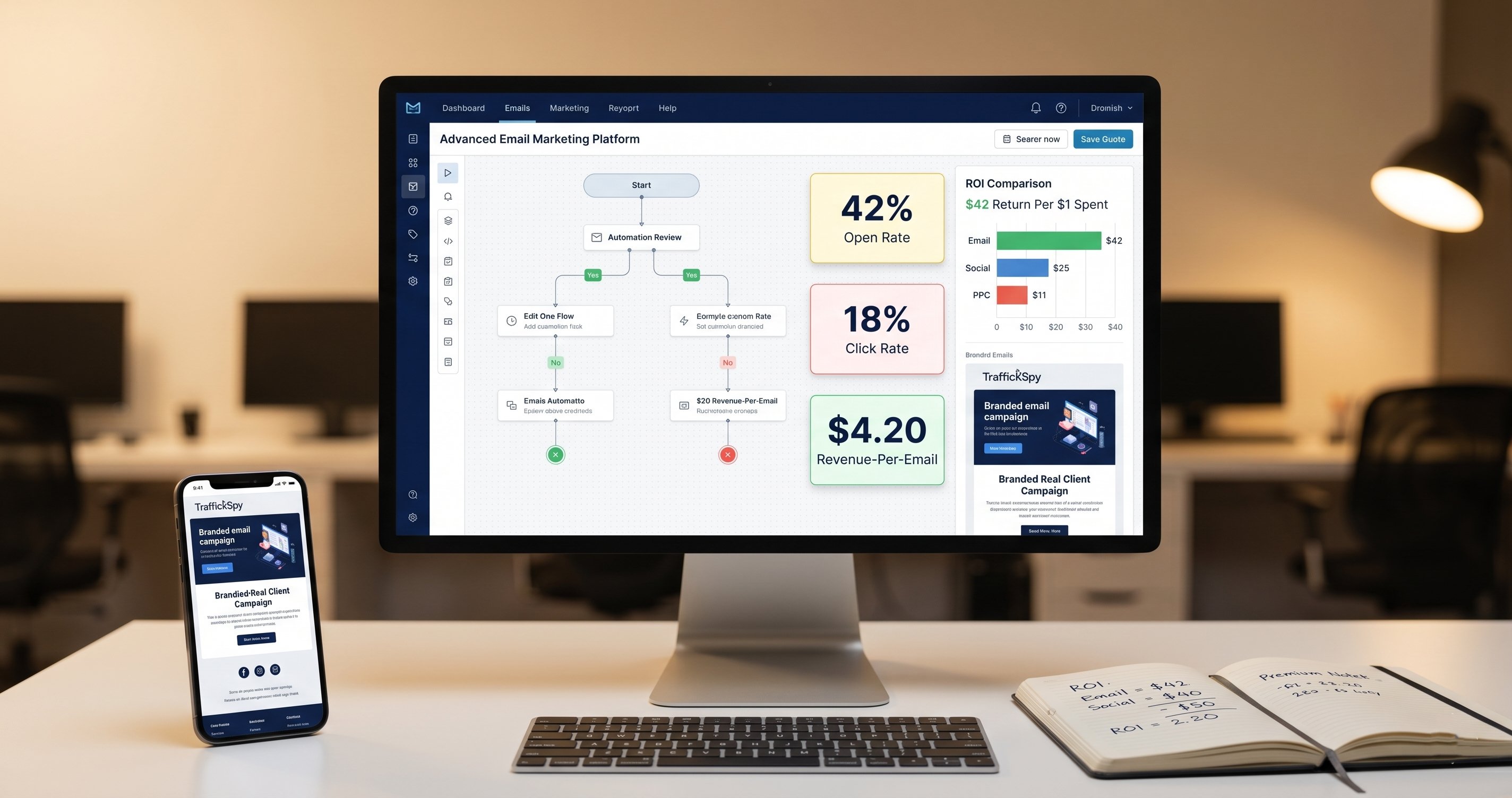
Email marketing has delivered more ROI for digital advertisers than any other channel for over two decades — and despite the rise of social media, TikTok, AI chat, and every other "email killer" that's emerged, the numbers haven't changed. The latest industry data shows email marketing averages $36–$42 return for every $1 spent, compared to $2–$5 for Google Ads (after ad spend) and $1.50–$3.00 for social media advertising.
Why Email ROI Is So High
Three structural advantages explain email's dominance: ownership (your email list is an owned asset — no algorithm can cut your reach overnight), purchase intent (subscribers have voluntarily opted in, making them self-selected high-intent audiences), and personalization scale (modern email platforms allow true 1:1 personalization based on subscriber behavior, purchase history, and lifecycle stage). Compare this to social media advertising, where reach is rented and organic algorithms are unpredictable.
Building a High-Quality Email List
List size means nothing without list quality. A 5,000-subscriber list of genuinely interested, responsive subscribers outperforms a 50,000-subscriber list built through giveaways. Build quality through: content upgrade lead magnets (a downloadable resource directly related to a specific blog post — these convert at 20–40% compared to 1–3% for generic site opt-ins), exit-intent popups with a specific, relevant offer, and paid search campaigns driving traffic to dedicated opt-in landing pages.
The 5 Automation Sequences Every Business Needs
Welcome sequence (5–7 emails, Days 1–14): Delivers the lead magnet, introduces your brand story, provides immediate value, and makes a soft offer. Typically generates 50–80% of total email revenue for new subscribers. Abandoned cart sequence (3 emails, 1–2 hours / 24 hours / 72 hours): Recovers 5–15% of abandoned carts. Post-purchase sequence (3–5 emails, Days 1–30): Onboards customers, reduces refund rates, drives reviews, and seeds cross-sell opportunities. Re-engagement sequence (4 emails): Reactivates 5–20% of lapsed subscribers. Upsell/cross-sell sequence (3 emails, triggered by purchase): Presents a logical next product to recent buyers.
Segmentation: The Key to 3x Open Rates
Broadcast emails sent to your entire list average 20–25% open rates. Segmented emails sent to relevant sub-groups average 45–65% open rates. Segment by: purchase status, engagement level, lead magnet downloaded, and funnel stage. Proper segmentation alone can double or triple email revenue without adding a single subscriber.
Email + Paid Advertising Integration
Upload your email list to Meta and Google as custom audiences to reach your subscribers with ads. Create lookalike audiences from your highest-engagement email subscribers — these typically outperform standard interest-based audiences by 40–60%. Use behavioral email signals to trigger retargeting campaigns with matching creative. Our lead generation services include email marketing strategy — contact us to learn how we build integrated email and paid systems.